

Apple iPod touch 32 GB (4th Generation) NEWEST MODEL

YOU SAVE $24.01 (8%) - WOW!

Apple iPod touch 32 GB (4th Generation) NEWEST MODEL
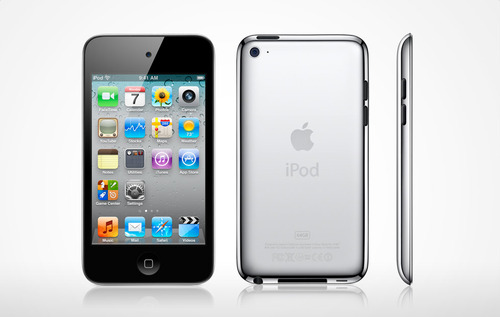
 Introducing the new iPod touch. Now with FaceTime, Retina display, HD video recording, and Game Center. Click to enlarge. Introducing the new iPod touch. Now with FaceTime, Retina display, HD video recording, and Game Center. Click to enlarge. |

iPod touch
touch 32 GB (4th Generation) NEWEST MODEL
Advanced engineering at play
World Class technology built into iPod touch is how you will be able to flick, tap, and pinch. This makes a racing game feel so real. It's why you're able to see a friend crack up at your jokes from across the world. And it's the reason iPod touch
is the most incredible iPod touch you'll ever own and will experience.Looks can be amazing.
iPod touch has an all-new design that makes it the thinnest, lightest, most amazing iPod touch that was ever manufactured. Holding one is all the proof you need. With its curved design, iPod touch is ONLY 7.2 millimeters thin. Its engineered-glass front and stainless steel back feel extremely smooth in your hand. Turn it on, and you're instantly blown away by the brilliancy of the Retina display. iPod touch is the ideal combination of stunning design and revolutionary technology--brilliant from the outside in.Retina display. A blast from the future.
There are lots of reasons you won't want to take your eyes and hands off the new iPod touch. The 960-by-640 backlit LCD display, for one. It has and amazing 326 pixels per inch, making it the highest-resolution iPod touch screen ever. To achieve this, Apple engineers developed pixels so small--they are only 78 micrometers across--that the human eye can't see these individual pixels. Even though you can't see them, you'll definitely notice and experience the difference. Text is remarkably sharp, and graphics are incredibly vivid.
Click on the link BELOW and go and read more about this brilliant product!!
Apple iPod touch 32 GB (4th Generation) NEWEST MODEL MP3 Players)
iPod touch Technical Details

- 32 GB capacity for about 8,000 songs, 40,000 photos, or 40 hours of video
- Up to 40 hours of audio playback or 7 hours of video playback on a single charge
- 3.5-inch (diagonal) widescreen iPod touch display with 960-by-640-pixel resolution (326 pixels per inch)
- Support for AAC, Protected AAC (iTunes Store), MP3, MP3 VBR, Audible, Apple Lossless, AIFF, and WAV audio formats; H.264, MPEG-4, and Motion JPEG video codecs in M4V, MP4, MOV, and AVI formats
- One-year limited warranty

See friends while you talk with FaceTime, or play games against friends or unknown foes with Game Center.
Make a movie. Starring you.
The next time you venture out on, say, an amazing hike, don't just tell your friends about it. Show them. In addition to the high-definition camera on the back, iPod touch has a VGA-quality camera on the front--above the display--that lets you see yourself on the display while you record. It's perfect for turning the camera on yourself. No more guessing if you're in the frame or accidentally cropping yourself out altogether. So get ready for your close-up.
Shoot what you want. Share where you want. Ever find yourself in the middle of typing an email when you see something that words just can't describe? Just launch the camera and record on the fly. Then upload your HD movie directly to YouTube. Or select some video from the Camera Roll and attach it to a new email message, ready to send. Posting to your Facebook page or blog is also just a tap away. And you can easily sync all the video you shoot on iPod touch back to your Mac or PC.
Point and shoot.
An awesome view. A decked-out cupcake. Your dog looking unbearably cute. If you want to take a quick photo to upload to your Facebook page, either camera on iPod touch can also capture stills. Just tap on the screen to adjust exposure. Then post to Facebook and let the comments begin.
Game Center. Way more than two can play that game.
Friends. Soon to be opponents.Bring your friends along for the ride. Or match. Or mission. Once you're signed in to the Game Center app, you can invite someone by sending a friend request using their nickname or email address. Your friends show up in a separate Friends list in the Game Center app. Tap on a friend's name, and you can see what games they've been playing. You can also check out pending friend requests you receive, and add as you see fit.
Leaderboards and achievements. Score some bragging rights.
Take a look at leaderboards and see how your score ranks against your friends, as well as all players of each game. You can also compare game achievements with your friends. Check out leaderboards and achievements in the Game Center app and in each individual game app. Let the smack talk begin.
Meet your match.
Say you want to get a multiplayer game going. Auto-match will prioritize your friends if they happen to be looking for an auto-match, too. Otherwise, it will set you up with a soon-to-be-friend from anywhere around the world. You can also choose to invite friends and have auto-match fill the number of players needed for a game.

The new Game Center app on iPod touch lets you expand your social gaming network--exponentially.
Frequently Bought Together
Click here to view customer reviews first hand
Buyers information
What WIKIPEDIA say about iPod's
By
Scott Showalter "purefusion" (Ohio, USA)
This review is from: Apple iPod touch 32 GB (4th Generation) NEWEST MODEL (Electronics)
Having had a chance to spend a little time with a review model gives me a chance to share the
experience with you a bit early (before my own arrives). I'll take you hands-on with the new model,
plus I'll share from my past two years of iPod touch ownership altogether, especially for those who
haven't yet owned (or been owned by) one of these mobile gems.
I've also hidden a treasure trove of info on how you can legitimately download tons of quality apps
for free. First though, let's quickly cover what's new.
+ Faster 1GHz A4 Processor - to keep up with the high demands of multitasking
+ Ultra high resolution "Retina display" - packs a 960 x 640 resolution at 326 pixels per inch
+ 15% larger battery - 3.44 Whr/930 mAh plays 7 hrs of video & 40 hrs of audio
+ Rear-facing camera - supports 960 x 720 sized photos (0.6 megapixels), plus 720p HD videos
+ Front-facing VGA-quality camera - VGA-quality is a resolution of 640 x 480 (0.3 megapixels)
+ 3-Axis Gyroscope - allows for higher precision and more motion gestures
+ Wireless N - Connect faster and go farther than ever, with this WiFi device (requires a router with 802.11n)
+ Built in microphone - but Apple reverted back to using the remote- and mic-less earphones
+ Game Center - Apple's own social gaming platform
+ Sleep/Power Button - it's been moved to the right, but not improved beyond that
+ Thinner, lighter than ever
* Note - Memory remains at the same 256MB despite several unconfirmed sources touting 512MB. There's also no vibrate module.
Unlike last year's iPod touch update, this one's a complete overhaul to the entire line. Last year,
the new models didn't change in appearance. On the inside, faster processors and double-
memory were added to the 32GB & 64GB models, but the 8GB got left out. Not this time.
Buying the new 8GB iPod touch indeed gets you all the new goodies. You'll also pay thirty
bucks more than before, so consider buying the 32GB model instead. You'll get 400% of
the storage capacity for only 23% more coin!
===== Background =====
I'm a mobile app developer who's created a few apps and games for the iPhone, iPod touch
and now iPad. I was initially drawn to the iPod touch because of the popularity and capabilities
of its mobile Web browsing--I was primarily a Web developer at the time and no other device
could surf the Web so well. After I got one, I was hooked. I racked up over a hundred bucks
in app purchases within the first month, and before long, I found myself learning how do develop
native apps for the device.
Indeed, if you have never had an iPod touch before, you're in for a real treat. Of course, if you
have, then you know first hand: it's is worth its weight in gold--no, in platinum. And now, with
the latest generation, it may even be worth its weight rare gem stones! I digress.
===== Out With the Old =====
The iPod touch is frequently called an iPhone without the phone. However, until now there
have been several other features also missing in the iPod touch besides the phone: a camera
, GPS, magnetometer (compass), and some newer amenities from the iPhone 4: front-facing
camera, high resolution "Retina display" as it has been dubbed, and the powerful 1GHz A4
processor--indeed a necessity to keep up with multitasking.
That all changes, now. The 4th gen iPod touch brings with it some new features and amenities,
some of which have been anticipated by iPod touch fans and developers alike, including myself,
for several generations of the device. From a developer's perspective, the more hardware features
we can get our hands on, the better and more innovative apps we can create, and the more users
that can download, use and enjoy them.
experience with you a bit early (before my own arrives). I'll take you hands-on with the new model,
plus I'll share from my past two years of iPod touch ownership altogether, especially for those who
haven't yet owned (or been owned by) one of these mobile gems.
I've also hidden a treasure trove of info on how you can legitimately download tons of quality apps
for free. First though, let's quickly cover what's new.
+ Faster 1GHz A4 Processor - to keep up with the high demands of multitasking
+ Ultra high resolution "Retina display" - packs a 960 x 640 resolution at 326 pixels per inch
+ 15% larger battery - 3.44 Whr/930 mAh plays 7 hrs of video & 40 hrs of audio
+ Rear-facing camera - supports 960 x 720 sized photos (0.6 megapixels), plus 720p HD videos
+ Front-facing VGA-quality camera - VGA-quality is a resolution of 640 x 480 (0.3 megapixels)
+ 3-Axis Gyroscope - allows for higher precision and more motion gestures
+ Wireless N - Connect faster and go farther than ever, with this WiFi device (requires a router with 802.11n)
+ Built in microphone - but Apple reverted back to using the remote- and mic-less earphones
+ Game Center - Apple's own social gaming platform
+ Sleep/Power Button - it's been moved to the right, but not improved beyond that
+ Thinner, lighter than ever
* Note - Memory remains at the same 256MB despite several unconfirmed sources touting 512MB. There's also no vibrate module.
Unlike last year's iPod touch update, this one's a complete overhaul to the entire line. Last year,
the new models didn't change in appearance. On the inside, faster processors and double-
memory were added to the 32GB & 64GB models, but the 8GB got left out. Not this time.
Buying the new 8GB iPod touch indeed gets you all the new goodies. You'll also pay thirty
bucks more than before, so consider buying the 32GB model instead. You'll get 400% of
the storage capacity for only 23% more coin!
===== Background =====
I'm a mobile app developer who's created a few apps and games for the iPhone, iPod touch
and now iPad. I was initially drawn to the iPod touch because of the popularity and capabilities
of its mobile Web browsing--I was primarily a Web developer at the time and no other device
could surf the Web so well. After I got one, I was hooked. I racked up over a hundred bucks
in app purchases within the first month, and before long, I found myself learning how do develop
native apps for the device.
Indeed, if you have never had an iPod touch before, you're in for a real treat. Of course, if you
have, then you know first hand: it's is worth its weight in gold--no, in platinum. And now, with
the latest generation, it may even be worth its weight rare gem stones! I digress.
===== Out With the Old =====
The iPod touch is frequently called an iPhone without the phone. However, until now there
have been several other features also missing in the iPod touch besides the phone: a camera
, GPS, magnetometer (compass), and some newer amenities from the iPhone 4: front-facing
camera, high resolution "Retina display" as it has been dubbed, and the powerful 1GHz A4
processor--indeed a necessity to keep up with multitasking.
That all changes, now. The 4th gen iPod touch brings with it some new features and amenities,
some of which have been anticipated by iPod touch fans and developers alike, including myself,
for several generations of the device. From a developer's perspective, the more hardware features
we can get our hands on, the better and more innovative apps we can create, and the more users
that can download, use and enjoy them.
===== In With the New =====
The striking new design of the latest iPod touch is definitely a looker. Apple has made it even
thinner (and I thought it was already too thin before) complete with a beautiful chrome back.
While the super thin design is certainly attractive, I've found it slightly difficult to keep it
well-gripped in your hands. The usual chrome back looks great too, but it's scratch-insistent.
Yes, it's incredibly easy to scratch it all up, even after the first few days. For these two reasons
, definitely get yourself a silicone skin (http://www.amazon.com/dp/B0042GVG5G?tag=1pod-20&ie=UTF8) alongside your new touch!
For ages, the feature topping everyone's wishlist for the iPod touch has been a camera.
Check! It handles HD video too--bonus! Granted, its not the 5 megapixel camera that the
iPhone 4 sports, but again, the new iPod touch is thinner than ever, making it a miracle that
we even got a camera in the first place, let alone two! Yes, Apple went the extra mile so we
could make video calls with our iPhone toting friends, via their FaceTime app. Brilliant! So,
having not had any camera on the iPod touch before, and now having TWO cameras on it
, we can't really complain can we? Nah.
I'll have details on the quality both cameras later, but what excites me even moreso is the
new much-higher resolution screen--dubbed "Retina display". You may not think much
of it if you haven't used an iPhone or iPod touch before, nor have an older model nearby
to compare it to, but for those that have and/or do, the difference is clear! (pun intended)
Where this really comes in handy is in browsing the Web and reading non-mobile-formatted
PDF e-books. Now, I can see things so much clearer at the default zoom level
(which shows the full width of a Web page or document). My vision isn't spectacular by
any means, I just don't mind seeing things smaller on the screen. It allows me to see more
content without having to scroll. Indeed, the Retina display was the #1 feature I never knew
I wanted (until I saw it in the iPhone 4 that is).
Other newness includes: 15% larger battery, HD video recording and editing, built-in mic,
wireless-n for nearly double the WiFi connection speed and distance, Game Center:
Apple's new social gaming platform (which seems to be Apple's attempt to kill-off third
party social gaming platforms like OpenFeint and Plus+), 3-axis gyroscope sensor, which
complements the existing accelerometer sensor, both of which handle the rotating, swinging
and other motion gestures of the device (previously, rotation were roughly calculated from
accelerometer data), and new placement of the sleep/power button on the right
(but still as difficult as ever to press).
Features still missing include: 512MB of memory, vibration, 5 MP quality camera + flash
(iPhone apps now support using LED flash as a flashlight, like Android does), magnetometer
(compass), and the GPS. I'd happily trade the thinness of the latest iPod touch to have the GPS
. WiFi based location is often inaccurate, and the GPS doesn't need a WiFi or cellular
connection, it just needs to see the satellites in the sky.
===== iOS vs Android =====
So far, Apple has cornered the market of multitouch mobile devices that aren't phones, but things are slowly changing. Currently, the two hottest mobile and smartphone operating systems out there right now are Apple's iOS (formerly: iPhone OS) and Google's Android. Of course, iOS is popular because it runs on not only the iPod touch, but also on the iPod touch and now on the ipad as well. Plus, it has garnered support from scores of app developers who've gotten behind Apple's slew of high-demand devices.
The iPod touch has really made iOS what it is today. It does a lot of what the iPhone does, without a contract, or carrier exclusivity, as is the case with the iPhone and the iPad (WiFi+3G models). So if it weren't for the iPod touch, a lot of the market share Apple now has in the industry would have been stifled by their carrier exclusivity. I think Apple will see the light soon, but that's another discussion.
Enter Android. Google has held a different stance on their mobile OS. It isn't tied to a select few devices, and it's open source, so it can be further developed by manufacturers who use it. Indeed, several mobile device manufacturers have now latched onto Android as a foundation for numerous devices. Wireless carriers that have been unable to carry the iPhone have also taken a liking to it. Now, tons of Android devices have been released, and there's no end in sight. Manufacturers have also seen the iPad's potential and now they want a piece of that pie, too. So, expect to see a lot more Android tablets and media-centric non-phone devices soon. The competition is heating up.
But not everything with Android, nor with iOS, is perfect. I own an EVO 4G, one of the most popular Android devices currently available. I've also used an iPod touch almost every day for nearly two years, so I'm pretty qualified to share my experience with each platform. Both certainly have their share of unique offerings, and neither of them are without flaws. For this reason, and because of the increasing competition between the two, I plan to dispel some of their key differences for you at various points in this review.
===== So What Can the iPod touch Actually Do? =====
Well, what can't it do?
The iPod touch is like a magical little box, only it's flat. While it cannot cook your breakfast, yet (I'm sure someone is already working on that), it can indeed do some pretty extraordinary things. It's an amazing catch-all device that can provide hours of entertainment, give you the power of the Web in your hand, and it can even replicate the functionality of countless one-off products. Developers have been creating apps that take advantage of special hardware of the iPod touch to emulate some...
I purchased my iPod touch 8G in January just for fun and to see what all the fuss was about. I use a laptop and have wireless connectivity in my home. But I don't store music on an Ipod and don't have "smart" cell phone. After using the iPod touch for a few months, all I can say is "WOW".
This device is like carrying a small computer in your pocket. I can connect to the internet wirelessly at home and anywhere I can find a public connection--library, cafe, etc. I check my email (read and compose), facebook, Meetups, Ravelry, take pictures and movies, and with the Skype App, can video call my kids. I have become hooked on the Angry Birds game, which is fun to do while waiting anywhere. I have also downloaded audio books from my library to take with me when I travel. I knit and have any pattern I am working on loaded on my Touch so I don't worry about losing it. All this in a 2x4 inch little device I can carry with me everywhere.
I considered getting a smart phone instead, but Verizon's additional monthly cost of $30/month for internet access turned me off. It would be nice to have internet access where ever I am, but I don't need it and don't want to pay $360/year for it. I like the fact that the Ipod Touch does not require any additional monthly costs.
I compared my iPod touch to my friends Ipad. It appears that my Touch does most everything the Ipad does, but it's just smaller.
My son has a Droid, which does what my Touch does plus it is his cell phone. But games wear his battery down quickly. I don't have to worry about that since my phone is seperate from my iPod touch. And I think my screen is a little bigger and sharper.
If I needed to be connected to the internet at all times and have a cell phone too, I would probably stick with a smart phone and pay the extra $30/month. But if you want a very versatile tool in a small package to carry with you, I highly recommend the Ipod Touch.
So much fun!
This device is like carrying a small computer in your pocket. I can connect to the internet wirelessly at home and anywhere I can find a public connection--library, cafe, etc. I check my email (read and compose), facebook, Meetups, Ravelry, take pictures and movies, and with the Skype App, can video call my kids. I have become hooked on the Angry Birds game, which is fun to do while waiting anywhere. I have also downloaded audio books from my library to take with me when I travel. I knit and have any pattern I am working on loaded on my Touch so I don't worry about losing it. All this in a 2x4 inch little device I can carry with me everywhere.
I considered getting a smart phone instead, but Verizon's additional monthly cost of $30/month for internet access turned me off. It would be nice to have internet access where ever I am, but I don't need it and don't want to pay $360/year for it. I like the fact that the Ipod Touch does not require any additional monthly costs.
I compared my iPod touch to my friends Ipad. It appears that my Touch does most everything the Ipad does, but it's just smaller.
My son has a Droid, which does what my Touch does plus it is his cell phone. But games wear his battery down quickly. I don't have to worry about that since my phone is seperate from my iPod touch. And I think my screen is a little bigger and sharper.
If I needed to be connected to the internet at all times and have a cell phone too, I would probably stick with a smart phone and pay the extra $30/month. But if you want a very versatile tool in a small package to carry with you, I highly recommend the Ipod Touch.
So much fun!
My original review focused on whether you can successfully use an 8 gb version of this 4th gen iPod touch in lieu of a more expensive, larger memory version. My conclusion (at the end of this highly revised review) was, and remains, a resounding YES but there is one aspect, that applies to ALL the iPod touch 4th generation editions (8/32/64 gb), that I now think is MUCH more important:
The quality of the screen display.
Simply put, this device has near-iPad screen quality in a 3.5" device. (960x640 resolution at 326 pixels per inch, vs. 1024x768 resolution at 132 pixels per inch).
That means you can get almost iPad quality video in approximately 3.6 ounces of device vs. 24 ounces of device; in a device that fits a shirt pocket vs. a device you need a separate bag for. In a device you can hold up as a reader vs. a device that tires your arms.
This Touch is VERY practical for reading NYTimes articles or USAToday articles in their reader applications, optimized for this size display (crisp, large type). VERY practical for browsing the regular on-line editions of most newspapers (tap once to fit a column to a screen with nice readable type). GREAT for YouTube since the YouTube app included with the device is optimized for delivering high def YouTube content - if available, HD videos are automatically preferred. GREAT for Netflix and Hulu Plus. GREAT for gmail and ok for Facebook (I am sure FB will make its dedicated app more user-friendly in the future).
Great, for me, for online banking and stock research/trading.
Great for catching up on tech websites in their "mobile" formats.
So-so for Yahoo; I don't like Yahoo Mobile right now and their regular online edition, via the built in Safari browser, doesn't scale up and down as nicely as the online NYTimes does.
And oh yeah, the device can store adequate amounts of your own music library (or stream Slacker or Pandora, customized for you, in free or pay editions) and download iTunes paid video content for later consumption, stream to Apple TV, or you can move your own DVD content to the device via easy conversion programs.
Last year I ventured out on some vacations with an iPod touch, the last generation, as a "backup" to my netbook. I found myself easily reading emails, but preferring the netbook for replies. I didn't read any books with it until earlier this year, and was surprised by how well book reading worked. I Skyped home.
When this new generation iPod touch came out, I got it as a matter of reflex, justifying the purchase on the basis of the built-in camera and built-in microphone (which means I don't have to use "inline mics" with ear buds any more). But in reality, the sharpness of the screen is MUCH more important. I have now, simply as a result of this device, switched to e-reading from print reading. On the road, this has largely displaced the netbook (except for reviews like this); most friends communicate in shorter emails these days anyway, and most emails are ads and blurbs, not stuff you need to reply to.
But now at home I find myself ALSO using this new generation iPod touch a LOT. In the morning to check emails for anything really important, to check NYTimes headlines, before I even roll out of bed. Anytime I want to check emails or Facebook the rest of the day, without firing up the regular desktop computer. At bed to read.
In short, the darn thing is a working computer. Great for CONSUMPTION, patience-testing for INPUT. (Although forcing my input to slow down, say, for Simple Notes entries may be a good thing - forces me to slow down and be a lot more concise.)
***********A word on gaming and pricing. My kids have the 8 gb, 4th gen (this one) model and LOVE it for games. The motion detector is VERY responsive and watching a 3.5 y.o. use "dual thumbs" on the screen blows me away. You will NOT get the same screen responsiveness and motion detection on an Android device. Some developers are even reluctant to develop Android versions because the hardware for Android devices simply has too many variants in the marketplace vs. much smaller overall market share. This can change, but for now Apple dominates the gaming market. This week Apple is offering the iPod touch in 8 gb mode for slightly over 2 bills but with a 25 gift card. The value for dollar is incredible. Think carefully before you try to find a substitute! (FWIW I love Apple hardware but don't like the "locked down" system it has become - I hate having to use iTunes as "Grand Central Station" for Touch operations. So I am actually inclined to be biased AGAINST Apple, but in the case of the Touch the results are simply too good to ignore.)
***********Best accessory ever: The screen on this new generation of iPod touch is very, very sharp, but in order to enjoy all that sharpness, you need to bring the screen really close to your eyes (assuming you don't have presbyopia and can focus close) OR simply carry a pair of cheap reading glasses as an "accessory" to these super sharp 4th generation screens. This lets you actually read the tiny type on the NY Times website, actually see the richness of colors and depth of detail on a video. So even if you don't need reading glasses for magazine reading, CONSIDER trying a pair of STRONG reading glasses (1.75, 2.0, 2.25, 2.5, 2.75, or even 3.0) to magnify the 3.5" display screen. Strong reading glasses make high-def YouTube, Netflix, and Hulu Plus videos POP for me.
My original review, edited to be slightly briefer, is below, so you will know where most of the pre-12/20 comments come from:
Can you get by with an 8gb Touch?
Yep, based on my experience with a 3rd gen 32 gb, and on my recent local purchase of the 4th gen (this current model) in 8 gb capacity.
When using the old 32 gb, I found out that I barely used its greater storage capacity. (I don't haul around a lot of music or videos - I just transfer what I want to listen to/watch for each road trip or listening/viewing cycle using iTunes). Apps, I discovered, don't take up much space, even games and books don't take up much space, unless you want to haul substantially more of your whole collection with you. Amazon's Kindle app is esp. device friendly, since you can archive books you've finished back to Amazon instead of keeping them on the device. iTunes is a great way to manage what content you want to store on your home computer - which becomes a sort of large "docking device" - and what you want top take "to go."
As a netbook substitute, storage isn't even that important. I can check my bank balance, transfer funds and execute orders on a brokerage account, listen to radio on Pandora or Slacker, watch music videos (and a lot more ) on YouTube, Skype, stream Netflix, and do a whole lot of other stuff on the 8 gb just fine.
In fact in hindsight the only real reason for me getting the 32 gb version in the older edition was to get the faster processor. But in the current generation, ALL THE 4th GENERATION HARDWARE IS THE SAME, except only for memory.
Do keep in mind on the 8gb edition you give up about a gig to systems operations, leaving only 7 gb or so for your stuff. And you need to leave from for apps and their space. I probably wouldn't put more than 6 gb of music and videos on the 8gb version. The other editions also give up the same space, but proportionately it is a smaller "hit" to your storage.
The 8gb makes a nice intersection on my personal "cheapness" and "minimalist" curves. The price doesn't get into nose-bleed territory where I start to wonder whether a netbook would makes more sense, and it's inexpensive enough to subject to the toils of daily wear and tear - keeping it handy in an outside day pack pocket, instead of more safely stowed deep inside the pack.
The quality of the screen display.
Simply put, this device has near-iPad screen quality in a 3.5" device. (960x640 resolution at 326 pixels per inch, vs. 1024x768 resolution at 132 pixels per inch).
That means you can get almost iPad quality video in approximately 3.6 ounces of device vs. 24 ounces of device; in a device that fits a shirt pocket vs. a device you need a separate bag for. In a device you can hold up as a reader vs. a device that tires your arms.
This Touch is VERY practical for reading NYTimes articles or USAToday articles in their reader applications, optimized for this size display (crisp, large type). VERY practical for browsing the regular on-line editions of most newspapers (tap once to fit a column to a screen with nice readable type). GREAT for YouTube since the YouTube app included with the device is optimized for delivering high def YouTube content - if available, HD videos are automatically preferred. GREAT for Netflix and Hulu Plus. GREAT for gmail and ok for Facebook (I am sure FB will make its dedicated app more user-friendly in the future).
Great, for me, for online banking and stock research/trading.
Great for catching up on tech websites in their "mobile" formats.
So-so for Yahoo; I don't like Yahoo Mobile right now and their regular online edition, via the built in Safari browser, doesn't scale up and down as nicely as the online NYTimes does.
And oh yeah, the device can store adequate amounts of your own music library (or stream Slacker or Pandora, customized for you, in free or pay editions) and download iTunes paid video content for later consumption, stream to Apple TV, or you can move your own DVD content to the device via easy conversion programs.
Last year I ventured out on some vacations with an iPod touch, the last generation, as a "backup" to my netbook. I found myself easily reading emails, but preferring the netbook for replies. I didn't read any books with it until earlier this year, and was surprised by how well book reading worked. I Skyped home.
When this new generation iPod touch came out, I got it as a matter of reflex, justifying the purchase on the basis of the built-in camera and built-in microphone (which means I don't have to use "inline mics" with ear buds any more). But in reality, the sharpness of the screen is MUCH more important. I have now, simply as a result of this device, switched to e-reading from print reading. On the road, this has largely displaced the netbook (except for reviews like this); most friends communicate in shorter emails these days anyway, and most emails are ads and blurbs, not stuff you need to reply to.
But now at home I find myself ALSO using this new generation iPod touch a LOT. In the morning to check emails for anything really important, to check NYTimes headlines, before I even roll out of bed. Anytime I want to check emails or Facebook the rest of the day, without firing up the regular desktop computer. At bed to read.
In short, the darn thing is a working computer. Great for CONSUMPTION, patience-testing for INPUT. (Although forcing my input to slow down, say, for Simple Notes entries may be a good thing - forces me to slow down and be a lot more concise.)
***********A word on gaming and pricing. My kids have the 8 gb, 4th gen (this one) model and LOVE it for games. The motion detector is VERY responsive and watching a 3.5 y.o. use "dual thumbs" on the screen blows me away. You will NOT get the same screen responsiveness and motion detection on an Android device. Some developers are even reluctant to develop Android versions because the hardware for Android devices simply has too many variants in the marketplace vs. much smaller overall market share. This can change, but for now Apple dominates the gaming market. This week Apple is offering the iPod touch in 8 gb mode for slightly over 2 bills but with a 25 gift card. The value for dollar is incredible. Think carefully before you try to find a substitute! (FWIW I love Apple hardware but don't like the "locked down" system it has become - I hate having to use iTunes as "Grand Central Station" for Touch operations. So I am actually inclined to be biased AGAINST Apple, but in the case of the Touch the results are simply too good to ignore.)
***********Best accessory ever: The screen on this new generation of iPod touch is very, very sharp, but in order to enjoy all that sharpness, you need to bring the screen really close to your eyes (assuming you don't have presbyopia and can focus close) OR simply carry a pair of cheap reading glasses as an "accessory" to these super sharp 4th generation screens. This lets you actually read the tiny type on the NY Times website, actually see the richness of colors and depth of detail on a video. So even if you don't need reading glasses for magazine reading, CONSIDER trying a pair of STRONG reading glasses (1.75, 2.0, 2.25, 2.5, 2.75, or even 3.0) to magnify the 3.5" display screen. Strong reading glasses make high-def YouTube, Netflix, and Hulu Plus videos POP for me.
My original review, edited to be slightly briefer, is below, so you will know where most of the pre-12/20 comments come from:
Can you get by with an 8gb Touch?
Yep, based on my experience with a 3rd gen 32 gb, and on my recent local purchase of the 4th gen (this current model) in 8 gb capacity.
When using the old 32 gb, I found out that I barely used its greater storage capacity. (I don't haul around a lot of music or videos - I just transfer what I want to listen to/watch for each road trip or listening/viewing cycle using iTunes). Apps, I discovered, don't take up much space, even games and books don't take up much space, unless you want to haul substantially more of your whole collection with you. Amazon's Kindle app is esp. device friendly, since you can archive books you've finished back to Amazon instead of keeping them on the device. iTunes is a great way to manage what content you want to store on your home computer - which becomes a sort of large "docking device" - and what you want top take "to go."
As a netbook substitute, storage isn't even that important. I can check my bank balance, transfer funds and execute orders on a brokerage account, listen to radio on Pandora or Slacker, watch music videos (and a lot more ) on YouTube, Skype, stream Netflix, and do a whole lot of other stuff on the 8 gb just fine.
In fact in hindsight the only real reason for me getting the 32 gb version in the older edition was to get the faster processor. But in the current generation, ALL THE 4th GENERATION HARDWARE IS THE SAME, except only for memory.
Do keep in mind on the 8gb edition you give up about a gig to systems operations, leaving only 7 gb or so for your stuff. And you need to leave from for apps and their space. I probably wouldn't put more than 6 gb of music and videos on the 8gb version. The other editions also give up the same space, but proportionately it is a smaller "hit" to your storage.
The 8gb makes a nice intersection on my personal "cheapness" and "minimalist" curves. The price doesn't get into nose-bleed territory where I start to wonder whether a netbook would makes more sense, and it's inexpensive enough to subject to the toils of daily wear and tear - keeping it handy in an outside day pack pocket, instead of more safely stowed deep inside the pack.
iPod

From Wikipedia, the free encyclopedia

Apple's iTunes software can be used to transfer music to the devices from computers using
certain versions of Apple Macintosh and Microsoft Windows operating systems.[2] For users
who choose not to use iTunes or whose computers cannot run iTunes, several open source
alternatives are available for the iPod.[3] iTunes and its alternatives may also transfer photos,
videos, games, contact information, e-mail settings, Web bookmarks, and calendars to iPod
models supporting those features.iPod is a line of portable media players created
alternatives are available for the iPod.[3] iTunes and its alternatives may also transfer photos,
videos, games, contact information, e-mail settings, Web bookmarks, and calendars to iPod
models supporting those features.iPod is a line of portable media players created
and marketed by Apple and designed by Jonathan Ive announced on October 23, 2001, and
released on November 10, 2001. The product line-up currently consists of the hard drive-based
iPod Classic, the touchscreen iPod Touch, the compact iPod Nano, and the ultra-compact
iPod Shuffle. iPod Classic models store media on an internal hard drive, while all other
released on November 10, 2001. The product line-up currently consists of the hard drive-based
iPod Classic, the touchscreen iPod Touch, the compact iPod Nano, and the ultra-compact
iPod Shuffle. iPod Classic models store media on an internal hard drive, while all other
models use flash memory to enable their smaller size (the discontinued Mini used a Microdrive
miniature hard drive). As with many other digital music players, iPods can also serve as external
data storage devices. Storage capacity varies by model, ranging from 2 GB for the iPod Shuffle
to 160 GB for the iPod Classic. All of the models have been redesigned multiple times since their
introduction. The most recent iPod redesigns were introduced on September 1, 2010.For iOS versions
prior to iOS 5, the iPod branding is also used for the media player applications included with the
miniature hard drive). As with many other digital music players, iPods can also serve as external
data storage devices. Storage capacity varies by model, ranging from 2 GB for the iPod Shuffle
to 160 GB for the iPod Classic. All of the models have been redesigned multiple times since their
introduction. The most recent iPod redesigns were introduced on September 1, 2010.For iOS versions
prior to iOS 5, the iPod branding is also used for the media player applications included with the
iPhone and iPad; the iPhone version is essentially a combination of the Music and Videos apps on the
iPod Touch. (As of iOS 5, separate apps named 'Music' and 'Video' are to be standardized across all
iOS-powered products.[4]) In either event, the iPhone and iPad have essentially the same media-player
capabilities as the iPod line, but they are generally treated as separate products.Discontinued models
of the line include the iPod Mini and the iPod Photo, the former being replaced by the iPod Nano,
iPod Touch. (As of iOS 5, separate apps named 'Music' and 'Video' are to be standardized across all
iOS-powered products.[4]) In either event, the iPhone and iPad have essentially the same media-player
capabilities as the iPod line, but they are generally treated as separate products.Discontinued models
of the line include the iPod Mini and the iPod Photo, the former being replaced by the iPod Nano,
and the latter reintegrated into the main iPod line (now the iPod Classic).
 History and design
The iPod line came from Apple's "digital hub" category,[5] when the company began creating software
for the growing market of personal digital devices. Digital cameras, camcorders and organizers had
well-established mainstream markets, but the company found existing digital music players "big and
clunky or small and useless" with user interfaces that were "unbelievably awful,"[5] so Apple decided
to develop its own. As ordered by CEO Steve Jobs, Apple's hardware engineering chief Jon Rubinstein
assembled a team of engineers to design the iPod line, including hardware engineers Tony Fadell and
Michael Dhuey,[6] and design engineer Jonathan Ive.[5] The product was developed in less than one
year and unveiled on October 23, 2001. Jobs announced it as a Mac-compatible product with a 5 GB
hard drive that put "1,000 songs in your pocket."[7]Apple did not develop the iPod software entirely
in-house, instead using PortalPlayer's reference platform based on two ARM cores. The platform had
rudimentary software running on a commercial microkernel embedded operating system. PortalPlayer
had previously been working on an IBM-branded MP3 player with Bluetooth headphones.[5] Apple
for the growing market of personal digital devices. Digital cameras, camcorders and organizers had
well-established mainstream markets, but the company found existing digital music players "big and
clunky or small and useless" with user interfaces that were "unbelievably awful,"[5] so Apple decided
to develop its own. As ordered by CEO Steve Jobs, Apple's hardware engineering chief Jon Rubinstein
assembled a team of engineers to design the iPod line, including hardware engineers Tony Fadell and
Michael Dhuey,[6] and design engineer Jonathan Ive.[5] The product was developed in less than one
year and unveiled on October 23, 2001. Jobs announced it as a Mac-compatible product with a 5 GB
hard drive that put "1,000 songs in your pocket."[7]Apple did not develop the iPod software entirely
in-house, instead using PortalPlayer's reference platform based on two ARM cores. The platform had
rudimentary software running on a commercial microkernel embedded operating system. PortalPlayer
had previously been working on an IBM-branded MP3 player with Bluetooth headphones.[5] Apple
contracted another company, Pixo, to help design and implement the user interface under the direct
supervision of Steve Jobs.[5] As development progressed, Apple continued to refine the software's
look and feel. Starting with the iPod Mini, the Chicago font was replaced with Espy Sans. Later iPods
switched fonts again to Podium Sans—a font similar to Apple's corporate font, Myriad. iPods with colo
r displays then adopted some Mac OS X themes like Aqua progress bars, and brushed metal meant to
evoke a combination lock. In 2007, Apple modified the iPod interface again with the introduction
supervision of Steve Jobs.[5] As development progressed, Apple continued to refine the software's
look and feel. Starting with the iPod Mini, the Chicago font was replaced with Espy Sans. Later iPods
switched fonts again to Podium Sans—a font similar to Apple's corporate font, Myriad. iPods with colo
r displays then adopted some Mac OS X themes like Aqua progress bars, and brushed metal meant to
evoke a combination lock. In 2007, Apple modified the iPod interface again with the introduction
of the sixth-generationiPod Classic and third-generation iPod Nano by changing the font to Helvetica
and, in most cases, splitting the screen in half by displaying the menus on the left and album artwork,
photos, or videos on the right (whichever was appropriate for the selected item).In September 2007,
during a lawsuit with patent holding company Burst.com, Apple drew attention to a patent for a similar
and, in most cases, splitting the screen in half by displaying the menus on the left and album artwork,
photos, or videos on the right (whichever was appropriate for the selected item).In September 2007,
during a lawsuit with patent holding company Burst.com, Apple drew attention to a patent for a similar
device that was developed in 1979. Kane Kramer applied for a UK patent for his design of a "plastic
music box" in 1981, which he called the IXI.[8] He was unable to secure funding to renew the US$
120,000 worldwide patent, so it lapsed and Kramer never profited from his idea.[8]
music box" in 1981, which he called the IXI.[8] He was unable to secure funding to renew the US$
120,000 worldwide patent, so it lapsed and Kramer never profited from his idea.[8]
Trademark
See also: Timeline of Apple Inc. products
The name iPod was proposed by Vinnie Chieco, a freelance copywriter, who (with others) was
called by Apple to figure out how to introduce the new player to the public. After Chieco saw a
prototype, he thought of the movie 2001: A Space Odyssey and the phrase "Open the pod bay
door, Hal!", which refers to the white EVA Pods of the Discovery One spaceship. Chieco saw an
analogy to the relationship between the spaceship and the smaller independent pods in the
relationship between a personal computer and the music player.[5] Apple researched the trademark
and found that it was already in use. Joseph N. Grasso of New Jersey had originally listed an "iPod"
trademark with the U.S. Patent and Trademark Office(USPTO) in July 2000 for Internet kiosks. The
first iPod kiosks had been demonstrated to the public in New Jersey in March 1998, and commercial
use began in January 2000, but had apparently been discontinued by 2001. The trademark was
registered by the USPTO in November 2003, and Grasso assigned it to Apple Computer, Inc. in 2005.[9]
called by Apple to figure out how to introduce the new player to the public. After Chieco saw a
prototype, he thought of the movie 2001: A Space Odyssey and the phrase "Open the pod bay
door, Hal!", which refers to the white EVA Pods of the Discovery One spaceship. Chieco saw an
analogy to the relationship between the spaceship and the smaller independent pods in the
relationship between a personal computer and the music player.[5] Apple researched the trademark
and found that it was already in use. Joseph N. Grasso of New Jersey had originally listed an "iPod"
trademark with the U.S. Patent and Trademark Office(USPTO) in July 2000 for Internet kiosks. The
first iPod kiosks had been demonstrated to the public in New Jersey in March 1998, and commercial
use began in January 2000, but had apparently been discontinued by 2001. The trademark was
registered by the USPTO in November 2003, and Grasso assigned it to Apple Computer, Inc. in 2005.[9]
The earliest recorded use in commerce of an "ipod" trademark was in 1991 by Chrysalis Corp. of
Sturgis, Michigan, styled "iPOD".[10]
The iPod line can play several audio file formats including MP3, AAC/M4A,
Audible audiobook, and Apple Lossless. The iPod Photo introduced the ability to display JPEG, BMP, GIF,
TIFF, and PNG image file formats. Fifth and sixth generation iPod Classics, as well as third generation
restrictions on video dimensions, encoding techniques and data-rates.[11] Originally, iPod software
only worked with Mac OS; iPod software for Microsoft Windows was launched with the second
audio format—but a converter for WMA files without Digital Rights Management (DRM) is provided
files using the "Advanced" menu in iTunes. Alternative open-source audio formats, such as Ogg Vorbis
During installation, an iPod is associated with one host computer. Each time an iPod connects to
its host computer, iTunes can synchronize entire music libraries or music playlists either
automatically or manually. Song ratings can be set on an iPod and synchronized later to the
iTunes library, and vice versa. A user can access, play, and add music on a second computer
if an iPod is set to manual and not automatic sync, but anything added or edited will be reversed
upon connecting and syncing with the main computer and its library. If a user wishes to automatically
sync music with another computer, an iPod's library will be entirely wiped and replaced with the other
computer's library.
its host computer, iTunes can synchronize entire music libraries or music playlists either
automatically or manually. Song ratings can be set on an iPod and synchronized later to the
iTunes library, and vice versa. A user can access, play, and add music on a second computer
if an iPod is set to manual and not automatic sync, but anything added or edited will be reversed
upon connecting and syncing with the main computer and its library. If a user wishes to automatically
sync music with another computer, an iPod's library will be entirely wiped and replaced with the other
computer's library.
User interface
(except the 3rd-generation iPod shuffle, the 6th generation iPod Nano, and iPod Touch) have
five buttons and the later generations have the buttons integrated into the click wheel – an innovation
that gives an uncluttered, minimalistt interface. The buttons perform basic functions such as menu,
play, pause, next track, and previous track. Other operations, such as scrolling through menu items
and controlling the volume, are performed by using the click wheel in a rotational manner. The
3rd-generation iPod Shuffle does not have any controls on the actual player; instead it has a small
control on the earphone cable, with volume-up and -down buttons and a single button for play and
pause, next track, etc. The iPod Touch has no click-wheel; instead it uses a 3.5" touch screen along
with a home button, sleep/wake button and (on the second and third generations of the iPod touch)
volume-up and -down buttons. The user interface for the iPod Touch is identical to that of the iPhone.
Differences include a lack of a phone application. Both devices use iOS.
five buttons and the later generations have the buttons integrated into the click wheel – an innovation
that gives an uncluttered, minimalistt interface. The buttons perform basic functions such as menu,
play, pause, next track, and previous track. Other operations, such as scrolling through menu items
and controlling the volume, are performed by using the click wheel in a rotational manner. The
3rd-generation iPod Shuffle does not have any controls on the actual player; instead it has a small
control on the earphone cable, with volume-up and -down buttons and a single button for play and
pause, next track, etc. The iPod Touch has no click-wheel; instead it uses a 3.5" touch screen along
with a home button, sleep/wake button and (on the second and third generations of the iPod touch)
volume-up and -down buttons. The user interface for the iPod Touch is identical to that of the iPhone.
Differences include a lack of a phone application. Both devices use iOS.
iTunes Store
Main articles: iTunes and iTunes Store
The iTunes Store (introduced April 29, 2003) is an online media store run by Apple and accessed
through iTunes. The store became the market leader soon after its launch[13] and Apple announced
the sale of videos through the store on October 12, 2005. Full-length movies became available on
September 12, 2006.[14]At the time the store was introduced, purchased audio files used the AAC
format with added encryption, based on the FairPlay DRM system. Up to five authorized computers
and an unlimited number of iPods could play the files. Burning the files with iTunes as an audio CD,
then re-importing would create music files without the DRM. The DRM could also be removed using
third-party software. However, in a deal with Apple, EMI began selling DRM-free, higher-quality songs
on the iTunes Stores, in a category called "iTunes Plus." While individual songs were made available
at a cost of US$1.29, 30¢ more than the cost of a regular DRM song, entire albums were available for the
same price, US$9.99, as DRM encoded albums. On 17 October 2007, Apple lowered the cost of individual
iTunes Plus songs to US$0.99 per song, the same as DRM encoded tracks. On January 6, 2009, Apple
announced that DRM has been removed from 80% of the music catalog, and that it would be removed
from all music by April 2009.iPods cannot play music files from competing music stores that use
rival-DRM technologies like Microsoft's protected WMA or RealNetworks' Helix DRM. Example
stores includeNapster and MSN Music. RealNetworks claims that Apple is creating problems for
itself[15] by using FairPlay to lock users into using the iTunes Store. Steve Jobs has stated that
Apple makes little profit from song sales, although Apple uses the store to promote iPod sales.[16]
However, iPods can also play music files from online stores that do not use DRM, such aseMusic
or Amie Street.Universal Music Group decided not to renew their contract with the iTunes Music
Store on July 3, 2007. Universal will now supply iTunes in an 'at will' capacity.17]Apple debuted the
iTunes Wi-Fi Music Store on September 5, 2007, in its Media Event entitled "The Beat Goes On..." This
service allows users to access the Music Store from either an iPhone or an iPod Touch and download
songs directly to the device that can be synced to the user's iTunes Library over a WiFi connection,
or, in the case of a iPhone, the telephone network.
through iTunes. The store became the market leader soon after its launch[13] and Apple announced
the sale of videos through the store on October 12, 2005. Full-length movies became available on
September 12, 2006.[14]At the time the store was introduced, purchased audio files used the AAC
format with added encryption, based on the FairPlay DRM system. Up to five authorized computers
and an unlimited number of iPods could play the files. Burning the files with iTunes as an audio CD,
then re-importing would create music files without the DRM. The DRM could also be removed using
third-party software. However, in a deal with Apple, EMI began selling DRM-free, higher-quality songs
on the iTunes Stores, in a category called "iTunes Plus." While individual songs were made available
at a cost of US$1.29, 30¢ more than the cost of a regular DRM song, entire albums were available for the
same price, US$9.99, as DRM encoded albums. On 17 October 2007, Apple lowered the cost of individual
iTunes Plus songs to US$0.99 per song, the same as DRM encoded tracks. On January 6, 2009, Apple
announced that DRM has been removed from 80% of the music catalog, and that it would be removed
from all music by April 2009.iPods cannot play music files from competing music stores that use
rival-DRM technologies like Microsoft's protected WMA or RealNetworks' Helix DRM. Example
stores includeNapster and MSN Music. RealNetworks claims that Apple is creating problems for
itself[15] by using FairPlay to lock users into using the iTunes Store. Steve Jobs has stated that
Apple makes little profit from song sales, although Apple uses the store to promote iPod sales.[16]
However, iPods can also play music files from online stores that do not use DRM, such aseMusic
or Amie Street.Universal Music Group decided not to renew their contract with the iTunes Music
Store on July 3, 2007. Universal will now supply iTunes in an 'at will' capacity.17]Apple debuted the
iTunes Wi-Fi Music Store on September 5, 2007, in its Media Event entitled "The Beat Goes On..." This
service allows users to access the Music Store from either an iPhone or an iPod Touch and download
songs directly to the device that can be synced to the user's iTunes Library over a WiFi connection,
or, in the case of a iPhone, the telephone network.
Games
Main articles: iPod game and App Store (iOS)
Video games are playable on various versions of iPods. The original iPod had the game Brick
(originally invented by Apple's co-founder Steve Wozniak) included as an easter egg hidden
feature; later firmware versions added it as a menu option. Later revisions of the iPod added
three more games: Parachute, Solitaire, and Music
Quiz.
n September 2006 the iTunes Store began to offer additional games for purchase with the launch
of iTunes 7, compatible with the fifth generation iPod with iPod software 1.2 or later. Those games
were: Bejeweled, Cubis 2, Mahjong, Mini Golf, Pac-Man, Tetris, Texas Hold 'Em, Vortex,
Asphalt 4: Elite Racing and Zuma. Additional games have since been added. These games
work on the 6th and 5th generation iPod classic and the 5th and 4th generation iPod nano.
feature; later firmware versions added it as a menu option. Later revisions of the iPod added
three more games: Parachute, Solitaire, and Music
Quiz.
n September 2006 the iTunes Store began to offer additional games for purchase with the launch
of iTunes 7, compatible with the fifth generation iPod with iPod software 1.2 or later. Those games
were: Bejeweled, Cubis 2, Mahjong, Mini Golf, Pac-Man, Tetris, Texas Hold 'Em, Vortex,
Asphalt 4: Elite Racing and Zuma. Additional games have since been added. These games
work on the 6th and 5th generation iPod classic and the 5th and 4th generation iPod nano.
With third parties like Namco, Square Enix, Electronic Arts, Sega, and Hudson Soft all making
games for the iPod, Apple's MP3 player has taken steps towards entering the video game
handheld console market. Even video game magazines like GamePro and EGM have reviewed
and rated most of their games as of late.[18] The games are in the form of .ipg files, which
are actually .zip archives in disguise[citation needed]. When unzipped, they reveal executable
files along with common audio and image files, leading to the possibility of third party games.
Apple has not publicly released a software development kit (SDK) for iPod-specific development.[19]
Apps produced with the iPhone SDKare compatible only with the iOS on the iPod Touch
and iPhone, which cannot run clickwheel-based games.
games for the iPod, Apple's MP3 player has taken steps towards entering the video game
handheld console market. Even video game magazines like GamePro and EGM have reviewed
and rated most of their games as of late.[18] The games are in the form of .ipg files, which
are actually .zip archives in disguise[citation needed]. When unzipped, they reveal executable
files along with common audio and image files, leading to the possibility of third party games.
Apple has not publicly released a software development kit (SDK) for iPod-specific development.[19]
Apps produced with the iPhone SDKare compatible only with the iOS on the iPod Touch
and iPhone, which cannot run clickwheel-based games.
File storage and transfer
All iPods except for the iPod Touch can function in "disk mode" as mass storage devices to
store data files[20] but this may not be the default behavior, and in the case of the iPod
Touch, requires special software.[21] If an iPod is formatted on a Mac OS X computer,
it uses the HFS+ file system format, which allows it to serve as a boot disk for a
Mac computer.[22]If it is formatted on Windows, the FAT32 format is used. With the release
of the Windows-compatible iPod, the default file system used on the iPod line
switched from HFS+ to FAT32, although it can be reformatted to either file system
(excluding the iPod Shuffle which is strictly FAT32). Generally, if a new iPod
(excluding the iPod Shuffle) is initially plugged into a computer running Windows, it will be
formatted with FAT32, and if initially plugged into a Mac running Mac OS X it will be formatted
with HFS+.[23]Unlike many other MP3 players, simply copying audio or video files to the
drive with a typical file management application will not allow an iPod to properly access them.
The user must use software that has been specifically designed to transfer media files to iPods,
so that the files are playable and viewable. Usually iTunes is used to transfer media to an iPod,
store data files[20] but this may not be the default behavior, and in the case of the iPod
Touch, requires special software.[21] If an iPod is formatted on a Mac OS X computer,
it uses the HFS+ file system format, which allows it to serve as a boot disk for a
Mac computer.[22]If it is formatted on Windows, the FAT32 format is used. With the release
of the Windows-compatible iPod, the default file system used on the iPod line
switched from HFS+ to FAT32, although it can be reformatted to either file system
(excluding the iPod Shuffle which is strictly FAT32). Generally, if a new iPod
(excluding the iPod Shuffle) is initially plugged into a computer running Windows, it will be
formatted with FAT32, and if initially plugged into a Mac running Mac OS X it will be formatted
with HFS+.[23]Unlike many other MP3 players, simply copying audio or video files to the
drive with a typical file management application will not allow an iPod to properly access them.
The user must use software that has been specifically designed to transfer media files to iPods,
so that the files are playable and viewable. Usually iTunes is used to transfer media to an iPod,
thoughseveral alternative third-party applications are available on a number of different platforms.
iTunes 7 and above can transfer purchased media of the iTunes Store from an iPod to a computer,
provided that computer containing the DRM protected media is authorized to play it.Media files
are stored on an iPod in a hidden folder, along with a proprietary database file. The hidden content
can be accessed on the host operating system by enabling hidden files to be shown. The media
files can then be recovered manually by copying the files or folders off the iPod. Many third-party
applications also allow easy copying of media files off of an iPod.
provided that computer containing the DRM protected media is authorized to play it.Media files
are stored on an iPod in a hidden folder, along with a proprietary database file. The hidden content
can be accessed on the host operating system by enabling hidden files to be shown. The media
files can then be recovered manually by copying the files or folders off the iPod. Many third-party
applications also allow easy copying of media files off of an iPod.
Hardware
See also: iPod dock connector.Connectivity
The dock connector also allowed the iPod to connect to accessories, which often supplement the
iPod's music, video, andOriginally, a FireWire connection to the host computer was used to update
songs or recharge the battery. The batterycould also be charged with a power adapter that was
included with the first four generations. The third generation began including a 30-pin dock connector
, allowing for FireWire or USB connectivity. This provided better compatibility with non-Apple
machines, as most of them did not have FireWire ports at the time. Eventually Apple began shipping
iPods with USB cables instead of FireWire, although the latter was available separately. As of the
first-generation iPod Nano and the fifth-generation iPod Classic, Apple discontinued using FireWire
for data transfer (while still allowing for use of FireWire to charge the device) in an attempt to reduce
cost and form factor. As of the second-generation iPod Touch and the fourth-generation iPod Nano,
FireWire charging ability has been removed. The second-, third-, and fifth-generation iPod Shuffle
uses a single 3.5 mm jack which acts as both a headphone jack and a data port for the dock. photo
playback. Apple sells a few accessories, such as the now-discontinued iPod Hi-Fi, but most are
manufactured by third parties such as Belkin and Griffin. Some peripherals use their own interface,
while others use the iPod's own screen. Because the dock connector is a proprietary interface, the
implementation of the interface requires paying royalties to Apple.[31]
iPod's music, video, andOriginally, a FireWire connection to the host computer was used to update
songs or recharge the battery. The batterycould also be charged with a power adapter that was
included with the first four generations. The third generation began including a 30-pin dock connector
, allowing for FireWire or USB connectivity. This provided better compatibility with non-Apple
machines, as most of them did not have FireWire ports at the time. Eventually Apple began shipping
iPods with USB cables instead of FireWire, although the latter was available separately. As of the
first-generation iPod Nano and the fifth-generation iPod Classic, Apple discontinued using FireWire
for data transfer (while still allowing for use of FireWire to charge the device) in an attempt to reduce
cost and form factor. As of the second-generation iPod Touch and the fourth-generation iPod Nano,
FireWire charging ability has been removed. The second-, third-, and fifth-generation iPod Shuffle
uses a single 3.5 mm jack which acts as both a headphone jack and a data port for the dock. photo
playback. Apple sells a few accessories, such as the now-discontinued iPod Hi-Fi, but most are
manufactured by third parties such as Belkin and Griffin. Some peripherals use their own interface,
while others use the iPod's own screen. Because the dock connector is a proprietary interface, the
implementation of the interface requires paying royalties to Apple.[31]
Accessories
Many accessories have been made for the iPod line. A large number are made by third party
companies, although many, such as the late iPod Hi-Fi, are made by Apple. Some accessories
add extra features that other music players have, such as sound recorders, FM radio tuners,
wired remote controls, and audio/visual cables for TV connections. Other accessories offer unique
features like the Nike+iPod pedometer and the iPod Camera Connector. Other notable accessories
include external speakers, wireless remote controls, protective case, screen films, and wireless
earphones.[32] Among the first accessory manufacturers were Griffin Technology, Belkin,
JBL, Bose, Monster Cable, and SendStation.BMW released the first iPod automobile interface,[33]
allowing drivers of newer BMW vehicles to control an iPod using either the built-in steering wheel
ontrols or the radio head-unit buttons. Apple announced in 2005 that similar systems would
be available for other vehicle brands, including Mercedes-enz,[34] Volvo,[35] Nissan, Toyota,[36]
Alfa Romeo, Ferrari,[37] Acura, Audi, Honda,[38] Renault, Infiniti[39] and Volkswagen.[40] Scion
offers standard iPod connectivity on all their cars.Some independent stereo manufacturers
including JVC, Pioneer, Kenwood, Alpine, Sony, and Harman Kardon also have iPod-specific
integration solutions. Alternative connection methods include adaptor kits (that use the cassette
deck or the CD changer port), audio input jacks, and FM transmitters such as the iTrip—although
personal FM transmitters are illegal in some countries. Many car manufacturers have added audio
input jacks as standard.[41]Beginning in mid-2007, four major airlines, United, Continental, Delta,
and Emirates, reached agreements to install iPod seat connections. The free service will allow
passengers to power and charge an iPod, and view video and music libraries on individual
seat-back displays.[42]Originally KLM and Air France were reported to be part of the deal with
Apple, but they later released statements explaining that they were only contemplating the possibility
of incorporating such systems.[43]
companies, although many, such as the late iPod Hi-Fi, are made by Apple. Some accessories
add extra features that other music players have, such as sound recorders, FM radio tuners,
wired remote controls, and audio/visual cables for TV connections. Other accessories offer unique
features like the Nike+iPod pedometer and the iPod Camera Connector. Other notable accessories
include external speakers, wireless remote controls, protective case, screen films, and wireless
earphones.[32] Among the first accessory manufacturers were Griffin Technology, Belkin,
JBL, Bose, Monster Cable, and SendStation.BMW released the first iPod automobile interface,[33]
allowing drivers of newer BMW vehicles to control an iPod using either the built-in steering wheel
ontrols or the radio head-unit buttons. Apple announced in 2005 that similar systems would
be available for other vehicle brands, including Mercedes-enz,[34] Volvo,[35] Nissan, Toyota,[36]
Alfa Romeo, Ferrari,[37] Acura, Audi, Honda,[38] Renault, Infiniti[39] and Volkswagen.[40] Scion
offers standard iPod connectivity on all their cars.Some independent stereo manufacturers
including JVC, Pioneer, Kenwood, Alpine, Sony, and Harman Kardon also have iPod-specific
integration solutions. Alternative connection methods include adaptor kits (that use the cassette
deck or the CD changer port), audio input jacks, and FM transmitters such as the iTrip—although
personal FM transmitters are illegal in some countries. Many car manufacturers have added audio
input jacks as standard.[41]Beginning in mid-2007, four major airlines, United, Continental, Delta,
and Emirates, reached agreements to install iPod seat connections. The free service will allow
passengers to power and charge an iPod, and view video and music libraries on individual
seat-back displays.[42]Originally KLM and Air France were reported to be part of the deal with
Apple, but they later released statements explaining that they were only contemplating the possibility
of incorporating such systems.[43]
Audio performance
The third-generation iPod had a weak bass response, as shown in audio tests.[44][45] The combination
of the undersized DC-blocking capacitors and the typical low-impedance of most consumer
headphones form a high-pass filter, which attenuates the low-frequency bass output. Similar
capacitors were used in the fourth-generation iPods.[46] The problem is reduced when using
high-impedance headphones and is completely masked when driving high-impedance (line level)
loads, such as an external headphone amplifier. The first-generation iPod Shuffle uses a
dual-transistor output stage,[44 rather than a single capacitor-coupled output, and does not
exhibit reduced bass response for any load.For all iPods released in 2006 and earlier, some
equalizer (EQ) sound settings could "distort the [bass] sound far too easily, even on undemanding
songs".[47] This would happen for EQ settings like R&B, Rock, Acoustic, and Bass Booster,
because the equalizer amplified the digital audio level beyond the software's limit, causing
distortion (clipping) on bass instruments.From the fifth-generation iPod on, Apple introduced
a user-configurable volume limit in response to concerns about hearing loss.[48] Users report that
in the sixth-generation iPod, the maximum volume output level is limited to 100 dB in EU markets.
Apple previously had to remove iPods from shelves in France for exceeding this legal limit.[49]
of the undersized DC-blocking capacitors and the typical low-impedance of most consumer
headphones form a high-pass filter, which attenuates the low-frequency bass output. Similar
capacitors were used in the fourth-generation iPods.[46] The problem is reduced when using
high-impedance headphones and is completely masked when driving high-impedance (line level)
loads, such as an external headphone amplifier. The first-generation iPod Shuffle uses a
dual-transistor output stage,[44 rather than a single capacitor-coupled output, and does not
exhibit reduced bass response for any load.For all iPods released in 2006 and earlier, some
equalizer (EQ) sound settings could "distort the [bass] sound far too easily, even on undemanding
songs".[47] This would happen for EQ settings like R&B, Rock, Acoustic, and Bass Booster,
because the equalizer amplified the digital audio level beyond the software's limit, causing
distortion (clipping) on bass instruments.From the fifth-generation iPod on, Apple introduced
a user-configurable volume limit in response to concerns about hearing loss.[48] Users report that
in the sixth-generation iPod, the maximum volume output level is limited to 100 dB in EU markets.
Apple previously had to remove iPods from shelves in France for exceeding this legal limit.[49]
Patent disputes
In 2005, Apple faced two lawsuits claiming patent infringement by the iPod line and its associated
technologies:[54] Advanced Audio Devices claimed the iPod line breached its patent on a
"music jukebox",[55] while a Hong Kong-based IP portfolio company called Pat-rights filed a
suit claiming that Apple's FairPlay technology breached a patent[56] issued to inventor Ho
Keung Tse. The latter case also includes the online music stores of Sony, RealNetworks, Napster, and
technologies:[54] Advanced Audio Devices claimed the iPod line breached its patent on a
"music jukebox",[55] while a Hong Kong-based IP portfolio company called Pat-rights filed a
suit claiming that Apple's FairPlay technology breached a patent[56] issued to inventor Ho
Keung Tse. The latter case also includes the online music stores of Sony, RealNetworks, Napster, and
Musicmatch as defendants.[57]
Apple's application to the United States Patent and Trademark Office for a patent on "rotational
user inputs",[58] as used on the iPod interface, received a third "non-final rejection" (NFR) in
August 2005. Also in August 2005, Creative Technology, one of Apple's main rivals in the MP3
player market, announced that it held a patent[59] on part of the music selection interface used
by the iPod line, which Creative dubbed the "Zen Patent", granted on August 9, 2005.[60] On
May 15, 2006, Creative filed another suit against Apple with the
United States District Court for the Northern District of California. Creative also asked the
user inputs",[58] as used on the iPod interface, received a third "non-final rejection" (NFR) in
August 2005. Also in August 2005, Creative Technology, one of Apple's main rivals in the MP3
player market, announced that it held a patent[59] on part of the music selection interface used
by the iPod line, which Creative dubbed the "Zen Patent", granted on August 9, 2005.[60] On
May 15, 2006, Creative filed another suit against Apple with the
United States District Court for the Northern District of California. Creative also asked the
United States International Trade Commission to investigate whether Apple was breaching
U.S. trade laws by importing iPods into the United States.[61]On August 24, 2006, Apple and
Creative announced a broad settlement to end their legal disputes. Apple will pay Creative
U.S. trade laws by importing iPods into the United States.[61]On August 24, 2006, Apple and
Creative announced a broad settlement to end their legal disputes. Apple will pay Creative
US$100 million for a paid-up license, to use Creative's awarded patent in all Apple products.
As part of the agreement, Apple will recoup part of its payment, if Creative is successful in
licensing the patent. Creative then announced its intention to produce iPod accessories by
joining the Made for iPod program.[62]
As part of the agreement, Apple will recoup part of its payment, if Creative is successful in
licensing the patent. Creative then announced its intention to produce iPod accessories by
joining the Made for iPod program.[62]
Sales
See also: iPod advertising
Since October 2004, the iPod line has dominated digital music player sales in the United
States, with over 90% of the market for hard drive-based players and over 70% of the
market for all types of players.[63] During the year from January 2004 to January 2005,
the high rate of sales caused its U.S. market share to increase from 31% to 65% and in
July 2005, this market share was measured at 74%. In January 2007 the iPod market
share reached 72.7% according to Bloomberg Online.
The release of the iPod Mini helped to ensure this success at a time when competing flash-based
music players were once dominant.[citation needed] On January 8, 2004, Hewlett-Packard (HP)
announced that they would sell HP-branded iPods under a license agreement from Apple.
Several new retail channels were used—including Wal-Mart—and these iPods eventually
made up 5% of all iPod sales. In July 2005, HP stopped selling iPods due to unfavorable
terms and conditions imposed by Apple.[64]In January 2007, Apple reported record
quarterly revenue of US$7.1 billion, of which 48% was made from iPod sales.[65]On
April 9, 2007, it was announced that Apple had sold its one-hundred millionth iPod, making
it the biggest selling digital music player of all time. In April 2007, Apple reported second quarter
revenue of US$5.2 billion, of which 32% was made from iPod sales.[66] Apple and several industry
analysts suggest that iPod users are likely to purchase other Apple products such as Mac
computers.[67]On September 5, 2007, during their "The Beat Goes On" event, Apple announced
that the iPod line had surpassed 110 million units sold.[citation needed]On October 22, 2007,
Apple reported quarterly revenue of US$6.22 billion, of which 30.69% came from Apple notebook
music players were once dominant.[citation needed] On January 8, 2004, Hewlett-Packard (HP)
announced that they would sell HP-branded iPods under a license agreement from Apple.
Several new retail channels were used—including Wal-Mart—and these iPods eventually
made up 5% of all iPod sales. In July 2005, HP stopped selling iPods due to unfavorable
terms and conditions imposed by Apple.[64]In January 2007, Apple reported record
quarterly revenue of US$7.1 billion, of which 48% was made from iPod sales.[65]On
April 9, 2007, it was announced that Apple had sold its one-hundred millionth iPod, making
it the biggest selling digital music player of all time. In April 2007, Apple reported second quarter
revenue of US$5.2 billion, of which 32% was made from iPod sales.[66] Apple and several industry
analysts suggest that iPod users are likely to purchase other Apple products such as Mac
computers.[67]On September 5, 2007, during their "The Beat Goes On" event, Apple announced
that the iPod line had surpassed 110 million units sold.[citation needed]On October 22, 2007,
Apple reported quarterly revenue of US$6.22 billion, of which 30.69% came from Apple notebook
sales, 19.22% from desktop sales and 26% from iPod sales. Apple's 2007 year revenue
increased to US$24.01 billion with US$3.5 billion in profits. Apple ended the fiscal year 2007
with US$15.4 billion in cash and no debt.[68]On January 22, 2008, Apple reported the best
quarter revenue and earnings in Apple's history so far. Apple posted record revenue of
US$9.6 billion and record net quarterly profit of US$1.58 billion. 42% of Apple's revenue for the
increased to US$24.01 billion with US$3.5 billion in profits. Apple ended the fiscal year 2007
with US$15.4 billion in cash and no debt.[68]On January 22, 2008, Apple reported the best
quarter revenue and earnings in Apple's history so far. Apple posted record revenue of
US$9.6 billion and record net quarterly profit of US$1.58 billion. 42% of Apple's revenue for the
First fiscal quarter of 2008 came from iPod sales, followed by 21% from notebook sales and
16% from desktop sales.[69]On October 21, 2008, Apple reported that only 14.21% of total
revenue for fiscal quarter 4 of year 2008 came from iPods.[70] At the September 9, 2009 keynote
presentation at the Apple Event, Phil Schiller announced total cumulative sales of iPods exceeded
220 million.[71]
16% from desktop sales.[69]On October 21, 2008, Apple reported that only 14.21% of total
revenue for fiscal quarter 4 of year 2008 came from iPods.[70] At the September 9, 2009 keynote
presentation at the Apple Event, Phil Schiller announced total cumulative sales of iPods exceeded
220 million.[71]
Industry impact
iPods have won several awards ranging from engineering excellence,[72] to most innovative audio
product,[73] to fourth best computer product of 2006.[74] iPods often receive favorable reviews;
scoring on looks, clean design, and ease of use. PC World says that iPod line has "altered the landscape
for portable audio players".[73] Several industries are modifying their products to work better with
both the iPod line and the AAC audio format. Examples include CD copy-protection schemes,[75]
and mobile phones, such as phones from Sony Ericssonand Nokia, which play AAC files rather than
WMA.
product,[73] to fourth best computer product of 2006.[74] iPods often receive favorable reviews;
scoring on looks, clean design, and ease of use. PC World says that iPod line has "altered the landscape
for portable audio players".[73] Several industries are modifying their products to work better with
both the iPod line and the AAC audio format. Examples include CD copy-protection schemes,[75]
and mobile phones, such as phones from Sony Ericssonand Nokia, which play AAC files rather than
WMA.
Besides earning a reputation as a respected entertainment device, the iPod has also been accepted as
business devices. Government departments, major institutions and international organisations have
turned to the iPod line as a delivery mechanism for business communication and training, such as the
Royal and Western Infirmaries in Glasgow, Scotland, where iPods are used to train new staff.[76]
business devices. Government departments, major institutions and international organisations have
turned to the iPod line as a delivery mechanism for business communication and training, such as the
Royal and Western Infirmaries in Glasgow, Scotland, where iPods are used to train new staff.[76]
iPods have also gained popularity for use in education. Apple offers more information on educational
uses for iPods on their website,[77] including a collection of lesson plans. There has also been
academic research done in this area in nursing education[78] and more general K-16 education.[79]
Duke University provided iPods to all incoming freshmen in the fall of 2004, and the iPod program
continues today with modifications.[80] Entertainment Weekly put it on its end-of-the-decade,
"best-of" list, saying, "Yes, children, there really was a time when we roamed the earth without
uses for iPods on their website,[77] including a collection of lesson plans. There has also been
academic research done in this area in nursing education[78] and more general K-16 education.[79]
Duke University provided iPods to all incoming freshmen in the fall of 2004, and the iPod program
continues today with modifications.[80] Entertainment Weekly put it on its end-of-the-decade,
"best-of" list, saying, "Yes, children, there really was a time when we roamed the earth without
thousands of our favorite jams tucked comfortably into our hip pockets. Weird."[81]
Criticism
Battery problems
The advertised battery life on most models is different from the real-world achievable life. For
example, the fifth generation 30 GB iPod is advertised as having up to 14 hours of music playback.
An MP3.com report stated that this was virtually unachievable under real-life usage conditions,
with a writer for MP3.com getting on average less than 8 hours from an iPod.[82]In 2003,
class action lawsuits were brought against Apple complaining that the battery charges
lasted for shorter lengths of time than stated and that the battery degraded over time.[83]
The lawsuits were settled by offering individuals either US$50 store credit or a free battery
replacement.[84]iPod batteries are not designed to be removed or replaced by the user,
although some users have been able to open the case themselves, usually following instructions
from third-party vendors of iPod replacement batteries. Compounding the problem, Apple
initially would not replace worn-out batteries. The official policy was that the customer should buy
example, the fifth generation 30 GB iPod is advertised as having up to 14 hours of music playback.
An MP3.com report stated that this was virtually unachievable under real-life usage conditions,
with a writer for MP3.com getting on average less than 8 hours from an iPod.[82]In 2003,
class action lawsuits were brought against Apple complaining that the battery charges
lasted for shorter lengths of time than stated and that the battery degraded over time.[83]
The lawsuits were settled by offering individuals either US$50 store credit or a free battery
replacement.[84]iPod batteries are not designed to be removed or replaced by the user,
although some users have been able to open the case themselves, usually following instructions
from third-party vendors of iPod replacement batteries. Compounding the problem, Apple
initially would not replace worn-out batteries. The official policy was that the customer should buy
a refurbished replacement iPod, at a cost almost equivalent to a brand new one. All lithium-ion
batteries lose capacity
batteries lose capacity
during their lifetime even when not in use[85] (guidelines are available forprolonging life-span)
and this situation led to a market for third-party battery replacement kits.Apple announced a
battery replacement program on November 14, 2003, a week before[86] a high publicity stunt and
and this situation led to a market for third-party battery replacement kits.Apple announced a
battery replacement program on November 14, 2003, a week before[86] a high publicity stunt and
website by the Neistat Brothers.[87] The initial cost was US$99,[88]and it was lowered to US$59
in 2005. One week later, Apple offered an extended iPod warranty for US$59.[89] For the iPod
Nano, soldering tools are needed because the battery is soldered onto the main board.
Fifth generation iPods have their battery attached to the backplate with adhesive.[90][91]
in 2005. One week later, Apple offered an extended iPod warranty for US$59.[89] For the iPod
Nano, soldering tools are needed because the battery is soldered onto the main board.
Fifth generation iPods have their battery attached to the backplate with adhesive.[90][91]
Reliability and durability
iPods have been criticized for alleged short life-span and fragile hard drives. A 2005 survey
conducted on the MacInTouch website found that the iPod line had an average failure rate
of 13.7% (although they note that comments from respondents indicate that "the true iPod
failure rate may be lower than it appears"). It concluded that some models were more durable
than others.[92] In particular, failure rates for iPods employing hard drives was usually
above 20% while those with flash memory had a failure rate below 10%, indicating poor hard
drive durability. In late 2005, many users complained that the surface of the first generation
iPod Nano can become scratched easily, rendering the screen unusable.[93][94] A class action
lawsuit was also filed.[95] Apple initially considered the issue a minor defect, but later began
shipping these iPods with protective sleeves.
conducted on the MacInTouch website found that the iPod line had an average failure rate
of 13.7% (although they note that comments from respondents indicate that "the true iPod
failure rate may be lower than it appears"). It concluded that some models were more durable
than others.[92] In particular, failure rates for iPods employing hard drives was usually
above 20% while those with flash memory had a failure rate below 10%, indicating poor hard
drive durability. In late 2005, many users complained that the surface of the first generation
iPod Nano can become scratched easily, rendering the screen unusable.[93][94] A class action
lawsuit was also filed.[95] Apple initially considered the issue a minor defect, but later began
shipping these iPods with protective sleeves.
Allegations of worker exploitation
On June 11, 2006, the British tabloid The Mail on Sunday reported that iPods are mainly
manufactured by workers who earn no more than US$50 per month and work 15-hour
shifts.[96]Apple investigated the case with independent auditors and found that, while
some of the plant's labour practices met Apple's Code of Conduct, others did not: employees
worked over 60 hours a week for 35% of the time, and worked more than six consecutive days
for 25% of the time.[97]
manufactured by workers who earn no more than US$50 per month and work 15-hour
shifts.[96]Apple investigated the case with independent auditors and found that, while
some of the plant's labour practices met Apple's Code of Conduct, others did not: employees
worked over 60 hours a week for 35% of the time, and worked more than six consecutive days
for 25% of the time.[97]
Foxconn, Apple's manufacturer, initially denied the abuses,[98] but when an auditing
team from Apple found that workers had been working longer hours than were allowed
under Chinese law, they promised to prevent workers working more hours than the cod
e allowed. Apple hired a workplace standards auditing company, Verité, and joined the
Electronic Industry Code of Conduct Implementation Group to oversee the measures.
On December 31, 2006, workers at the Foxconn factory in Longhua, Shenzhen formed
a union affiliated with the All-China Federation of Trade Unions,[99] the Chinese
government-approved union umbrella organization.[100][101]In 2010, a number of
workers committed suicide at a Foxconn operations in China. Apple, HP, and others stated
that they were investigating the situation. Foxconn guards have been videotaped beating
employees. Another employee killed himself in 2009 when an Apple prototype went missing
, and claimed in messages to friends, that he had been beaten and interrogated.[102][103]
team from Apple found that workers had been working longer hours than were allowed
under Chinese law, they promised to prevent workers working more hours than the cod
e allowed. Apple hired a workplace standards auditing company, Verité, and joined the
Electronic Industry Code of Conduct Implementation Group to oversee the measures.
On December 31, 2006, workers at the Foxconn factory in Longhua, Shenzhen formed
a union affiliated with the All-China Federation of Trade Unions,[99] the Chinese
government-approved union umbrella organization.[100][101]In 2010, a number of
workers committed suicide at a Foxconn operations in China. Apple, HP, and others stated
that they were investigating the situation. Foxconn guards have been videotaped beating
employees. Another employee killed himself in 2009 when an Apple prototype went missing
, and claimed in messages to friends, that he had been beaten and interrogated.[102][103]
As of 2006, the iPod was produced by about 14,000 workers in the U.S. and 27,000 overseas.
Further, the salaries attributed to this product were overwhelmingly distributed to highly
skilled U.S. professionals, as opposed to lower skilled U.S. retail employees or overseas
manufacturing labor. One interpretation of this result is that U.S. innovation can create more
Further, the salaries attributed to this product were overwhelmingly distributed to highly
skilled U.S. professionals, as opposed to lower skilled U.S. retail employees or overseas
manufacturing labor. One interpretation of this result is that U.S. innovation can create more
jobs overseas than domestically.[104]
View more personal and home entertainment here: http://www.ajglobaltrading.com/home-entertainment/
View more personal and home entertainment here: http://www.ajglobaltrading.com/home-entertainment/


